

Travel wipes drying out is one of the most common small-pack failures a buyer can discover after launch. The product may leave the factory with acceptable moisture, but repeated opening, weak adhesive, poor film barrier, damaged seals, or hot storage can reduce wetness before the pack is finished.
For retail, hospitality, airline, outdoor, and private label programs, small wipe packs are especially sensitive because they contain fewer sheets and a higher proportion of packaging surface relative to the amount of liquid inside. A minor leak or weak reseal can therefore change the user experience quickly.
This guide explains how to investigate travel wipes drying out, what to test before approval, and how to separate packaging failure from liquid-loading or storage issues. It also addresses an important point on Ecoshine’s current website: the Travel Wipes product page describes a compressed wipe that expands with water, while the Travel & Outdoor category describes ready-to-use moist wipes in resealable packs. Buyers should confirm which format applies to the project before using this dry-out testing framework.
First Confirm Whether the Product Is Actually Pre-Moistened
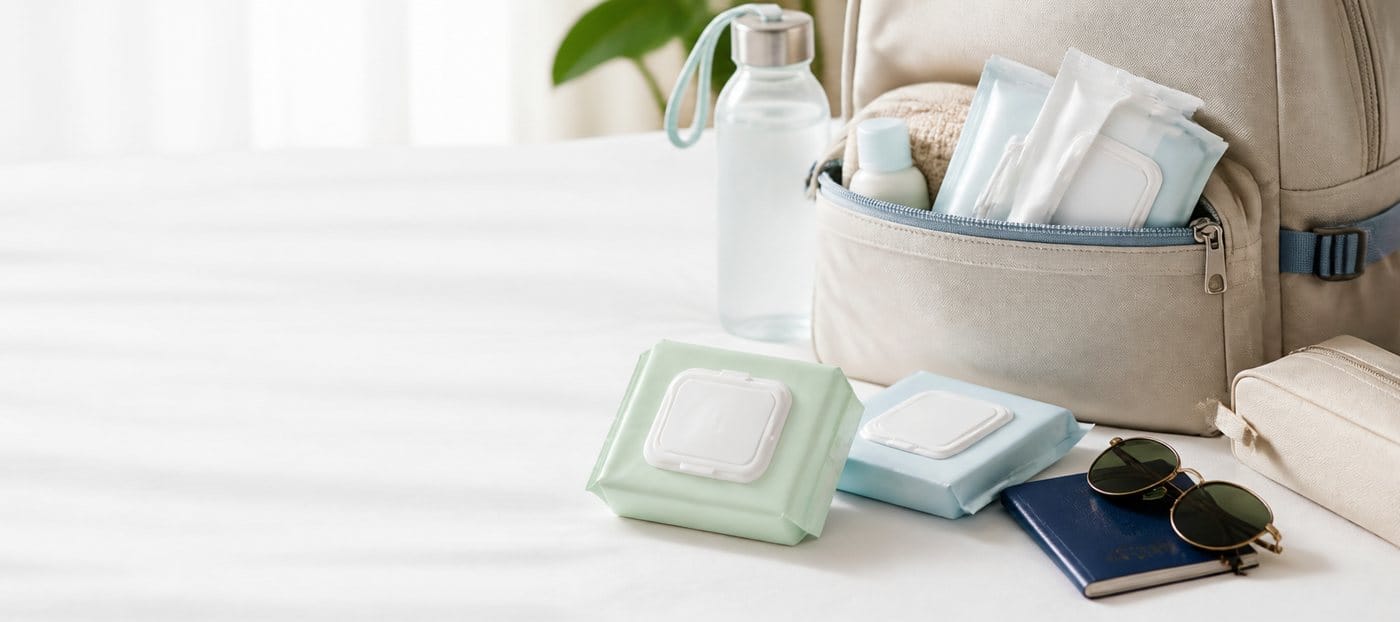
Before testing travel wipes drying out, confirm whether the commercial SKU is a pre-moistened wipe or a dry compressed wipe that requires water before use.
Ecoshine’s current Travel Wipes page describes “compact compressed wet wipes that expand with water,” and lists an 8-piece, 15 × 14 cm, 50 GSM spunlace nonwoven format. By contrast, the Travel & Outdoor Wipes category describes compact ready-to-use wipes with balanced moisture, resealable packs, and portable cleansing.
Those are different product forms. A dry compressed wipe cannot “dry out” in the same way as a pre-moistened wipe because there is no retained lotion to lose. Therefore, the sample brief must state the actual format before testing begins.
Why Small Packs Can Lose Moisture Faster
Small packs can be convenient, but they leave less margin for error. In a large pack, some moisture variation may be less noticeable because there is more total liquid and more wipes. In a compact travel pack, the first few openings can represent a large part of the product’s total use cycle.
Travel wipes drying out can be accelerated by a small dispensing opening, a weak pressure-sensitive label, repeated flexing in a bag, poor film barrier, heat exposure, or an initial liquid loading that is too low for the substrate and sheet count.
The packaging system should therefore be evaluated as a complete moisture-control system rather than as decoration around the wipe. In practice, travel wipes drying out should be treated as a packaging-and-product interaction problem.
Separate Initial Dryness From Moisture Loss Over Time
One of the first troubleshooting questions is whether the wipes were too dry from the beginning or became dry after opening.
If the first sample is under-wet immediately after production, the likely issue may involve liquid loading, distribution, or formula feel. If the wipe feels acceptable on day one but noticeably drier after repeated use, travel wipes drying out may be more strongly linked to seal performance, film barrier, closure behavior, or storage conditions.
| Observed Problem | Likely Area to Investigate | Buyer Check |
|---|---|---|
| Dry from first opening | Liquid loading or distribution | Compare pack net weight and wipe wetness at top, middle, and bottom |
| Good first day, dry after several openings | Reseal or barrier performance | Run repeated open-close and storage testing |
| Only top wipes dry | Opening exposure or uneven moisture distribution | Compare sheet positions in the pack |
| Leakage plus dryness | Seal damage or liquid migration | Inspect pouch edges and closure area |
| Dryness after hot storage | Temperature exposure and packaging barrier | Run controlled storage comparisons |
Check the Film Barrier Before Blaming the Formula
Packaging film controls the movement of moisture and vapor. If the structure is not appropriate for the product, travel wipes drying out can occur even when the formula and liquid loading were correct at filling.
Buyers should ask the supplier to identify the approved film structure for the commercial pack and confirm whether the same film is used for the sample and mass-production version. A temporary sample pouch may not provide the same barrier as the final printed laminate.
When possible, compare finished pack weight over time under controlled conditions. Weight loss can provide a useful indication of moisture loss, although the interpretation should account for packaging, formula volatility, and test conditions.
Test the Resealable Label Through Repeated Open-Close Cycles
A resealable label can perform well on the first opening and fail after repeated use. Adhesive contamination, wrinkles, dust, lotion contact, or a poor label-to-film combination can reduce reseal strength.
For travel wipes drying out, repeated opening is more relevant than a single peel test because consumers may open a pack several times during a trip.
A practical development test can include a defined number of open-close cycles, consistent peel direction, a set dwell time after resealing, and visual inspection for edge lift. The buyer should also note whether the label naturally aligns with the opening or tends to trap folds that leave a leak path.
FDA advises consumers to keep wipe containers tightly closed to help prevent wipes from drying out, which supports the importance of closure performance in real use. Buyers can review the FDA disposable wipes guidance for this storage recommendation.
Evaluate Flip-Top Lids and Labels as a Combined System
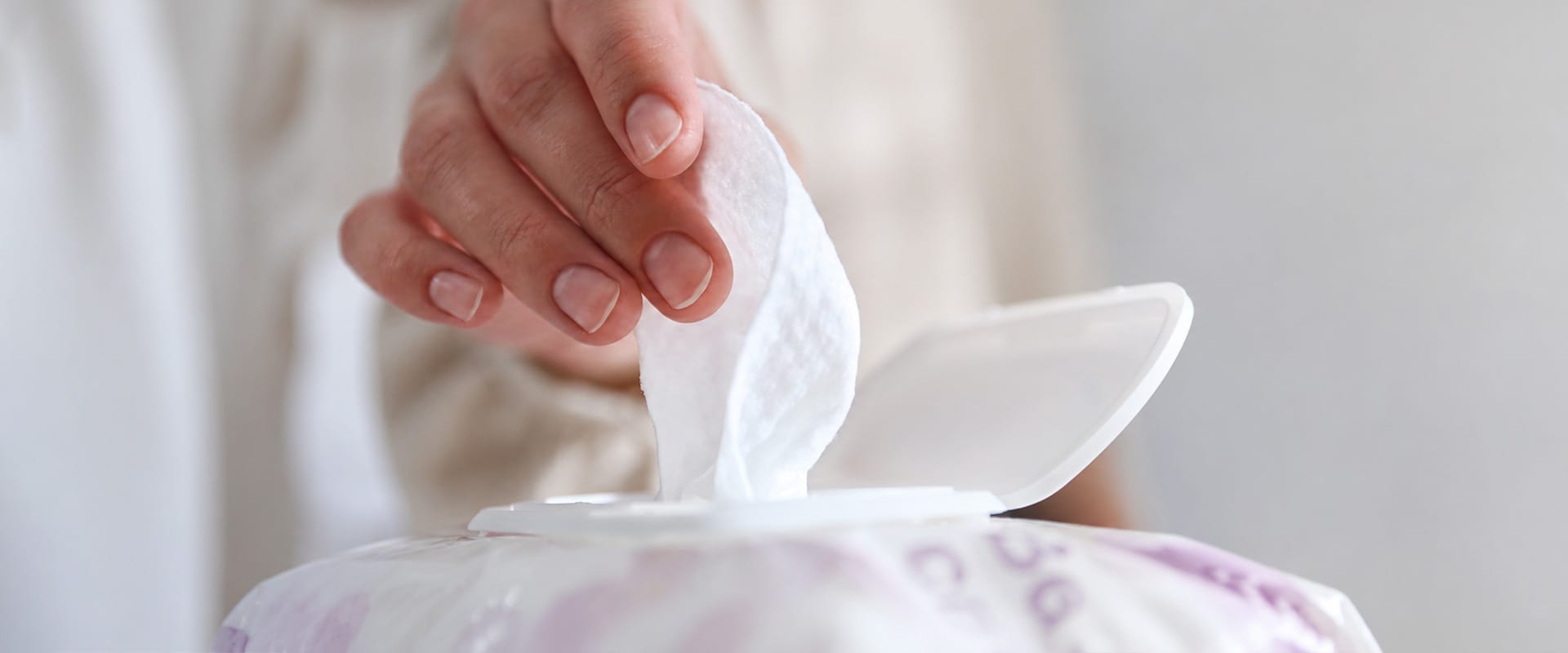
If the final pack uses a plastic flip-top lid over a resealable label, both components should be tested together. A lid can improve user handling, but it does not automatically compensate for a poor underlying seal.
Travel wipes drying out can still occur when the lid closes correctly but the inner label does not reseal, the lid opening is too large, the pack film flexes excessively, or the adhesive loses performance after liquid contact.
Check lid alignment, hinge function, closing force, snap engagement, label adhesion, and the condition of the pouch beneath the lid after repeated use.
Measure Moisture Loss With Pack-Weight Tracking
A simple but useful development method is to record the sealed pack weight before testing and again after defined use and storage intervals.
For travel wipes drying out, pack-weight tracking can help distinguish subjective “feels drier” feedback from measurable moisture loss. The test should use comparable packs, the same number of wipes removed at each interval, and the same storage environment.
A sample test could record:
- initial unopened pack weight;
- weight after first opening;
- weight after a defined number of open-close cycles;
- weight after 24, 48, or 72 hours of controlled storage;
- remaining wipe count;
- top, middle, and bottom wipe wetness observations;
- visible leakage or seal damage.
The purpose is not to create a universal pass/fail number. The buyer and supplier should set acceptance criteria for the actual product, formula, pack size, and intended use.
Control the Storage Temperature During Testing
Temperature affects evaporation, adhesive behavior, and formula stability. A pack that performs well in a cool office may behave differently in a hot vehicle or warehouse.
FDA notes that temperature extremes can cause wipes to dry out or change ingredients. This is particularly relevant to travel wipes drying out because travel products are often stored in cars, luggage, backpacks, hotel rooms, or outdoor environments.
For development testing, compare packs stored under controlled room conditions with packs exposed to the expected upper and lower storage conditions. Exact test temperatures should be selected by qualified technical teams based on the formula, packaging, market, and distribution route.
Check Liquid Loading Against GSM and Sheet Area
A thicker or larger wipe generally requires more liquid to achieve the same perceived wetness as a smaller or lighter sheet. Therefore, liquid loading should not be specified independently from GSM and sheet dimensions.
When troubleshooting travel wipes drying out, calculate how much liquid is available relative to the dry wipe mass and sheet count. Two packs with the same total liquid can feel very different if one uses larger or heavier sheets.
Also examine whether the liquid is distributed evenly. A pack may contain enough total lotion but still deliver a dry first wipe and an overly wet bottom wipe if distribution is poor.
Test the Top, Middle, and Bottom Wipes Separately
Checking only the first sheet can hide distribution problems. For a better evaluation, sample wipes from different positions in the pack.
In a travel wipes drying out investigation, the top wipe often receives the most air exposure after opening. The bottom wipe may hold more liquid if gravity and pack orientation cause migration. The middle wipes may best represent average performance.
Record subjective wetness, pack position, sheet condition, and any measurable weight data. If the pack is meant to be stored horizontally or vertically, test both orientations if that could affect liquid distribution.
Simulate Real Travel Handling
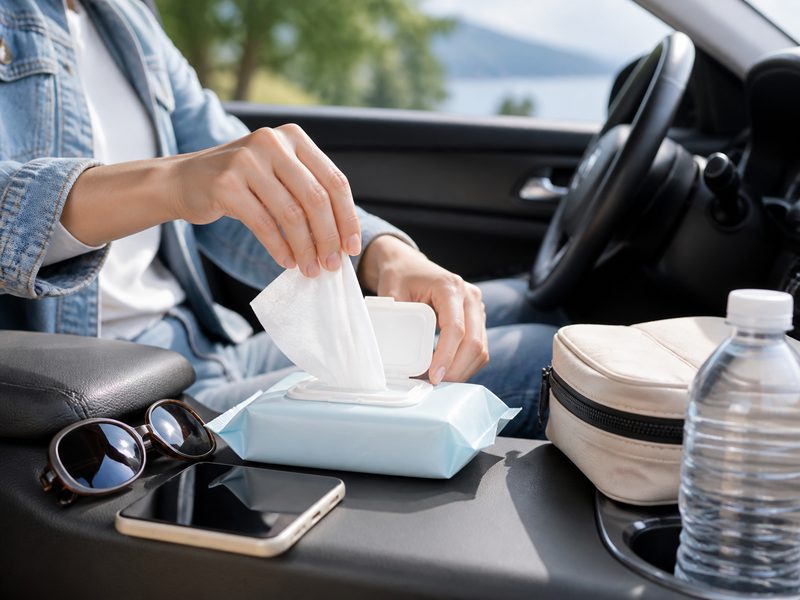
Travel packs are squeezed, bent, turned upside down, exposed to pressure changes, and stored inside bags with other objects. Static shelf testing does not reproduce every use condition.
To investigate travel wipes drying out, include handling that represents the real channel. Place samples inside a packed travel bag, expose them to repeated flexing, check for accidental label lifting, and inspect pouch seals after compression.
For airline or hospitality programs, buyers may also want to confirm whether the pack dimensions, opening method, and disposal instructions remain practical in the intended environment.
Distinguish Dry-Out Complaints From Poor Dispensing
Consumers may describe a wipe as “dry” when the actual problem is poor liquid transfer caused by dispensing or folding.
If several sheets pull out together, the pack may lose moisture faster because the opening remains exposed longer. If the next sheet does not present correctly, users may leave the label open while trying to find it. These behaviors can contribute to travel wipes drying out.
Test the fold configuration, opening size, one-at-a-time dispensing, and the interaction between the wipe texture and pouch opening. Packaging and fold should be approved together.
Use a Structured Seal-Test Record
| Test Item | Method to Define | What to Record |
|---|---|---|
| Initial seal inspection | Visual and manual check | Wrinkles, channels, weak edges, pinholes, leakage |
| Repeated reseal | Defined open-close cycle count | Adhesion, edge lift, alignment, closure feel |
| Pack-weight loss | Defined storage interval | Weight change and wipe count |
| Temperature exposure | Controlled hot/cold storage | Seal condition, wetness, odor, package deformation |
| Handling simulation | Bag compression and movement | Label lift, seal damage, leakage |
| Dispensing | One-at-a-time pull test | Multiple pulls, opening time, wipe presentation |
A written record makes travel wipes drying out easier to diagnose because every sample is tested under the same conditions.
When to Reject a Packaging Sample
A buyer should not approve a pouch simply because it looks good. Packaging should be rejected or revised when the sample shows repeated edge lifting, visible leakage, loss of reseal after a realistic number of openings, significant unexplained pack-weight loss, poor dispensing, or deformation under normal handling.
For travel wipes drying out, the threshold should be agreed before approval. A travel pack designed for two or three uses may have different performance requirements from a family-size pack expected to be opened dozens of times.
The acceptance rule should reflect the commercial product, not an arbitrary universal standard. For small packs, travel wipes drying out should be assessed against realistic opening frequency and storage conditions.
Keep Formula, Packaging, and Storage Changes Traceable
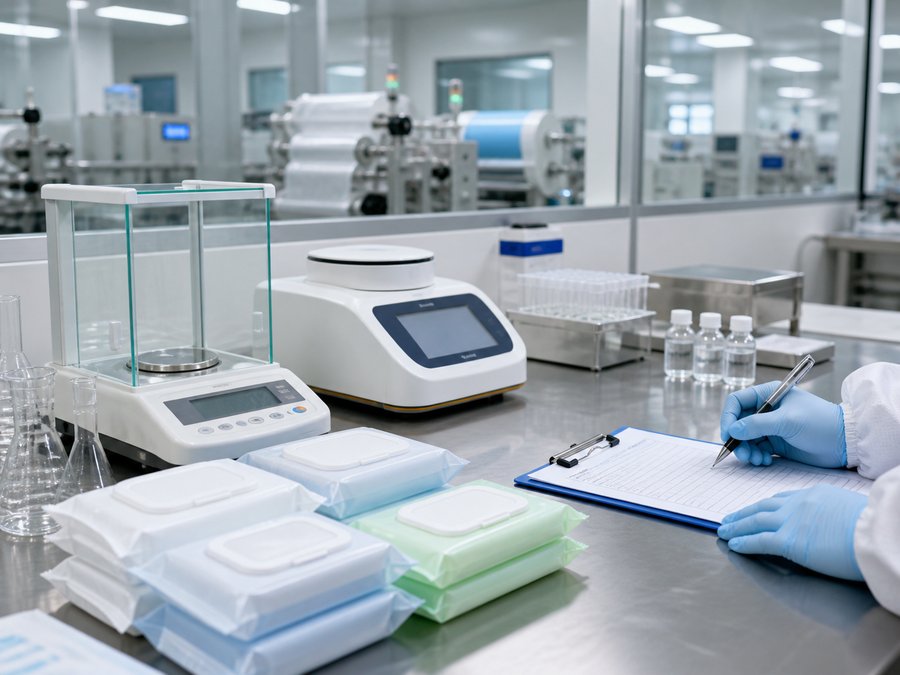
If a pack fails, change one variable at a time where possible. A simultaneous change in film, label adhesive, liquid loading, formula, and fold makes it difficult to identify the root cause.
Each new development round for travel wipes drying out should carry a revision code. Record which packaging film, label, lid, formula, substrate, GSM, sheet size, and filling condition were used.
This version control helps both buyer and factory understand which change solved the problem and prevents an old packaging component from being reintroduced later.
How Buyers Should Brief Ecoshine for Small Travel Packs
Before requesting a travel-wipe sample, first confirm whether you need a ready-to-use moist wipe or a water-activated compressed format. This is especially important because Ecoshine’s current product page and category page describe different travel-wipe formats.
For a ready-to-use project where travel wipes drying out is a concern, send the intended use, target market, sheet size, GSM, wipe count, formula direction, target wetness, pack dimensions, closure type, artwork status, and expected number of consumer openings.
Use the Ecoshine custom wet wipes service page to review available customization fields, or submit the full brief through the contact page.
Conclusion
Travel wipes drying out is usually not a single-variable problem. It can involve initial liquid loading, moisture distribution, packaging barrier, seal quality, resealable-label performance, dispensing, repeated opening, handling, and storage temperature.
The most useful approval process starts by confirming the product format, then tests the complete ready-to-use pack under repeatable conditions. Track pack weight, inspect top/middle/bottom wipes, cycle the closure, simulate travel handling, and record each packaging revision.
For Ecoshine projects, buyers should also resolve the current ready-to-use versus compressed-wipe description before ordering samples. Once the intended product form is clear, seal and moisture-retention testing can be matched to the actual commercial SKU.
FAQ
Why are my travel wipes drying out after opening?
Travel wipes drying out after opening can result from weak resealing, poor film barrier, low initial liquid loading, uneven moisture distribution, repeated exposure to air, hot storage, or damage to the pouch seal.
How can I test a resealable travel wipes pack?
Use a defined number of open-close cycles, inspect edge lift and alignment, record pack weight over time, check top/middle/bottom wipe wetness, and store comparable packs under controlled conditions.
Does a flip-top lid stop travel wipes from drying out?
A flip-top lid can improve closure handling, but it does not guarantee moisture retention. The lid, underlying resealable label, pouch film, opening, and seals should be tested as one system.
Should travel wipes be tested in hot storage?
Yes, when hot storage is realistic for the distribution or use environment. FDA notes that temperature extremes can cause wipes to dry out or change. Test conditions should be selected by qualified technical teams.
Do compressed travel wipes need dry-out testing?
Not in the same way as pre-moistened wipes. A dry compressed wipe that expands only after water is added does not depend on retained lotion inside the pack. The first step is therefore to confirm which travel-wipe format is being sourced.